
NATURE’S BALANCE
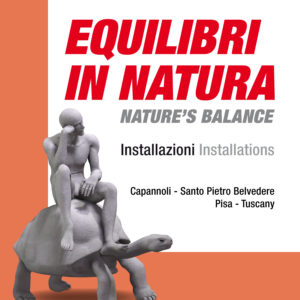 NATURE’S BALANCE represent for the Municipality of Capannoli a new artistic and cultural experience.
Another stage of the enhancement and development process of this Municipality’s heritage, is to set alongside the historical museums of Villa Baciocchi an exhibition installed in two symbolic places of Capannoli and Santo Pietro Belvedere.
We would like to thank Naturaliter which, along with the Municipality Administration, has offered to visitors something new. Today, in addition to the renewed Zoological Museum and rich Archaeological museum placed in Villa Baciocchi; NATURE’S BALANCE will welcome and accompany visitors to the research of beauty and peace, respectively inside the secular park of the Villa and in the historic town centre of Santo Pietro Belvedere. Enjoy the trip!
Carrying Amphora
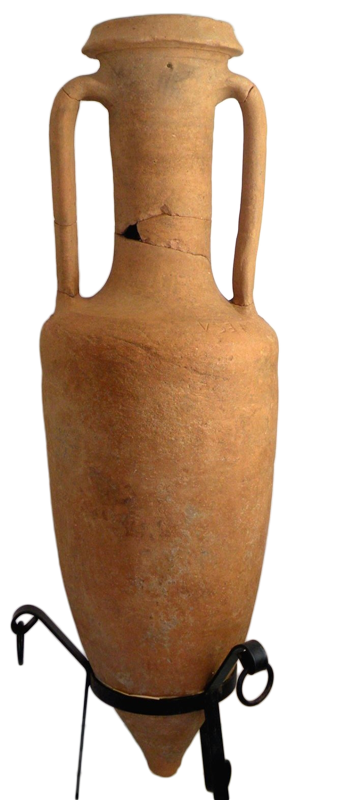
In 1991, during works in Scannicci, Terricciola, was discovered an Etruscan burial dated back to the second-third century BC.
The ashes of the deceased were contained in bronze laminated vessel, along with its belongings as ceramics and bronzes pieces exposed in the museum.
The grave goods include also an Italo-Greek carrying amphora with the name of the Etruscan’s family of LECU from Volterra engraved on the shoulder.
Age
III/II b.C.Findings
TerricciolaAgontano of San Giusto treasure
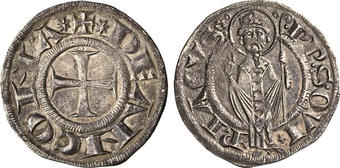
In 2008 was discovered a little closet of 32 medieval coins in Pievacchia, Capannoli, on the right bank of the River Era. The little treasure includes also a silver Grosso of Ancona, also called “Agontano”, dated back the second half of 14th century.
Age
XIV centuryFindings
CapannoliFornacette Closet
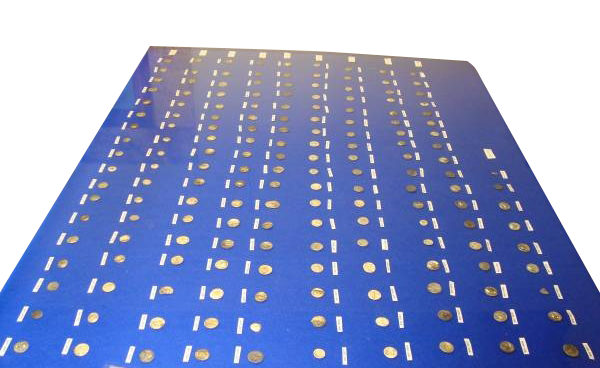
In 1913 the Fornacette area, during the expansion of the Bientina’s emissary, was discovered a closet of about two hundred of Roman silver coins.
The most ancient coin of the little treasure, is a denarius datable 133 BC; the closet was closed around 1-2 AD with a substantial quantity of Augusto’s coins.
Age
II-I b.C.Findings
Fornacette di CalcinaiaTomb of Montevaso
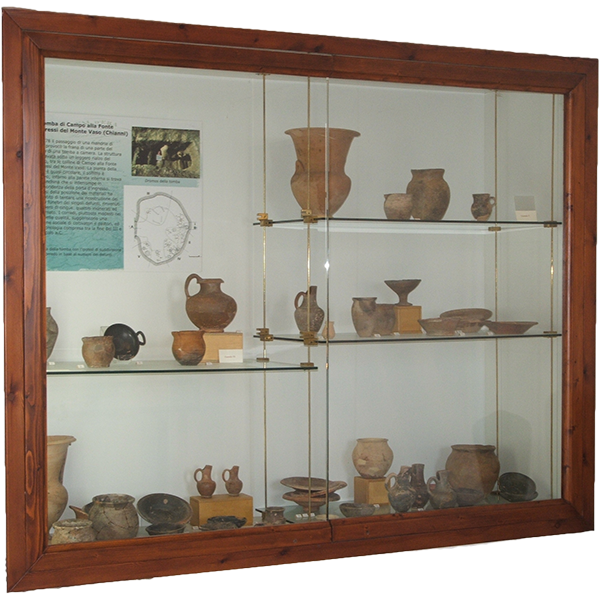
The tomb was discovered accidentally at the end of January 1978, when cattle herds passage caused the collapse of a part of the ceiling.
The grave goods, almost in good conditions or intact, is composed of 49 items from five different origins (4 incinerations and one inhumation).


